
If you had asked most Arkansas farmers five years ago whether growing quality raspberries in this part of the state was realistic, the honest answer would have been a polite no. Raspberries are a cool-climate fruit. They thrive in the Pacific Northwest, in New England, in parts of the upper Midwest where summers stay mild and the sun does not bear down with the kind of intensity it does along the Arkansas River Valley. Down here, the heat is relentless, and for most berry varieties, that heat is a hard ceiling on what is possible.
We decided the ceiling was worth testing.
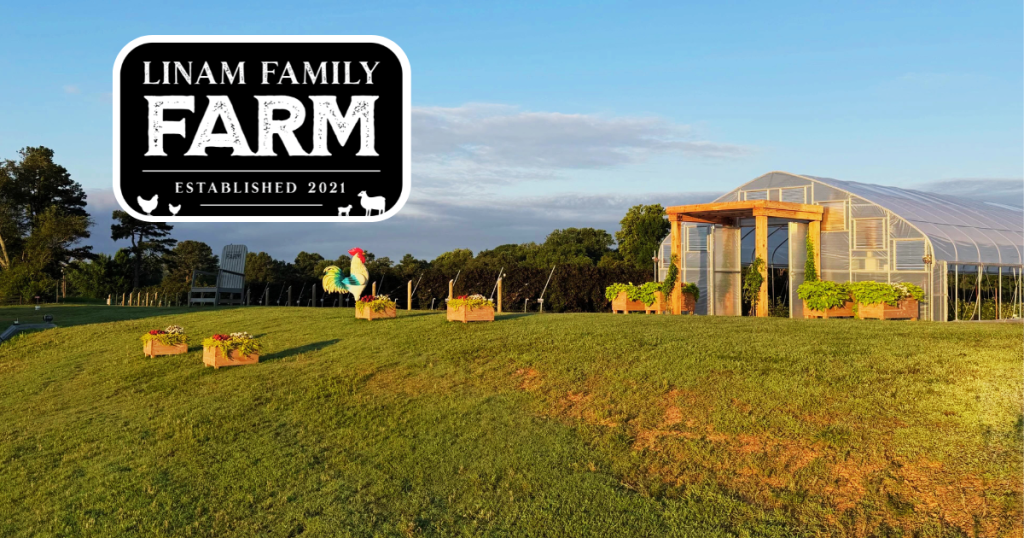
This spring, Linam Farm is introducing raspberries for the first time, and we are doing it in a way that takes the Arkansas climate head-on rather than hoping the weather cooperates. The key is our new high tunnel — a fully climate-controlled growing environment that lets us grow fruit here that has no business being this good this far south. If you have driven by the farm recently and spotted the new structure near the store, this is what it is all about.
Why Raspberries Are So Difficult to Grow in Arkansas
The problem with growing raspberries in the South is not one thing — it is a combination of factors that compound each other throughout the season. Arkansas summers are hot, humid, and intense, and raspberries are simply not built for that environment.
The most visible consequence of growing raspberries in direct Arkansas sun is sunscald. When ripe or nearly ripe raspberries are exposed to high temperatures and direct sunlight for extended periods, the side of the berry facing the sun loses its color and turns white. The berry looks damaged, and in terms of its market value and visual appeal, it effectively is. A white-sided raspberry is not going to inspire anyone to drive out to a farm and pick a bucket of them.
Beyond sunscald, heat stress during critical growth periods affects the overall quality of the fruit — its sugar development, its firmness, its shelf life after picking. Raspberries that spend their entire ripening process fighting heat stress simply do not taste as good as they should. You end up with fruit that looks questionable and disappoints at the table, which is the last thing we want to put our name on.
For years, this is why the conventional wisdom held that you just did not grow raspberries commercially south of a certain latitude. We were not satisfied with that answer.
What a High Tunnel Actually Does
A high tunnel is different from a standard greenhouse in important ways. A greenhouse is typically a sealed, actively heated structure designed to extend growing seasons in cold climates. A high tunnel is more of a protective and modifying structure — it creates a controlled microclimate that can be warmer or cooler than the outside environment, depending on how it is managed, with the goal of giving the plants conditions they would not naturally have access to in that location.
Our high tunnel at Linam Farm is on the more sophisticated end of what this technology can do. The walls are not fixed — they lower and raise electronically, allowing us to adjust airflow and ventilation based on conditions throughout the day. Fans circulate air through the structure to prevent heat buildup and reduce humidity. Louvers control the direction and volume of airflow to keep temperatures consistent from one end of the tunnel to the other.
The result is that we can maintain interior temperatures that stay roughly 10 degrees cooler than outside conditions on the hottest summer days. That may not sound dramatic, but in agricultural terms, 10 degrees is the difference between a stressed plant and a thriving one, between sunscalded fruit and beautiful, deeply colored berries.
We can also control shade levels inside the tunnel, which directly addresses the sunscald problem. The same intense sunlight that bakes unprotected raspberries in an open field is filtered and diffused inside the structure, reaching the plants at the intensity they need for photosynthesis and sugar development without the damaging overexposure that causes the fruit to bleach.
The Arbor Out Front
Before you even step into the tunnel, you will walk through the arbor we built at the entrance. Like most things at Linam Farm, it was built by hand using reclaimed materials from the property — the same weathered wood and iron that went into the farm store.
The arbor is already planted with cross vines, a native climbing plant that produces vivid tangerine-colored flowers and fills in quickly with dense, attractive foliage. As the season progresses, those vines will grow up and over the arbor frame, creating a shaded walkway at the tunnel entrance that is both functional and genuinely beautiful. The shade helps moderate temperatures right at the entry point, and the flowers attract pollinators that benefit everything growing nearby.
The whole setup is meant to feel like an arrival, like the transition from the outside world into something a little more intentional. We put care into that experience because we believe the way a farm feels when you walk onto it is part of what makes a visit worth making.
Six Varieties, One Big Experiment
Because we are growing raspberries in conditions where no one around here has done this on a commercial scale, we treated this first season as a genuine experiment. Rather than committing to a single variety and hoping it performs well, we planted six different raspberry varieties in the tunnel to see which ones respond best to our specific growing conditions, our management approach, and the Arkansas climate as modified by the tunnel environment.
We will not have fully reliable data until next season, once we have seen a complete growth and fruiting cycle from each variety. But the early signs are already telling us things. As of this spring, the plants are healthy, growing vigorously, already reaching about a foot in height, and producing some early ripe berries well ahead of when we expected the season to start. That is an encouraging sign that the tunnel is doing its job.
We will share the full variety list once we have enough season data to say something meaningful about each one. What we can say now is that we selected varieties specifically for their heat tolerance, their flavor profiles, and their fit with the tunnel management approach we are using. These were not random choices — we put real research into which raspberries gave us the best chance of success in these conditions.
How Raspberries Grow: What You Should Know Before You Pick
One of the things we enjoy most about having people come to the farm is the chance to share how things actually work. Raspberries are fascinating plants, and there are a few things worth knowing before you come out to pick them.
Raspberry plants are perennial canes, meaning the root system lives on from year to year even though the above-ground canes complete their cycle and die back. This is why, once raspberry plants are established, you do not have to plant new ones each spring. The most common management approach is simply to mow the spent canes down after the season ends, and new canes emerge from the same root system the following year, ready to fruit again.
Raspberry plants also spread by sending out runners from the mother plant, producing new canes at the edge of the root zone over time. Left unmanaged, a raspberry planting will gradually expand outward into the surrounding area. We manage this inside the tunnel by keeping the planting beds defined and mowing around the perimeters to direct growth where we want it.
When you are picking raspberries, the fruit should release from the plant with almost no effort when it is fully ripe. A berry that resists pulling is not ready yet. A ripe raspberry will feel slightly soft, will be deeply colored all the way around with no white or green patches, and will come away cleanly, leaving the small white core on the plant. That separation is how you know you have got the real thing.
What This Means for Linam Farm Visitors
Raspberries at Linam Farm will be a u-pick experience, available in season from the high tunnel. Like blueberries, you will grab your bucket at the farm store and head into the field — in this case, into the tunnel itself, which is a genuinely cool experience. Walking through the arbor, into the climate-controlled growing environment, picking fresh raspberries in Arkansas in the middle of summer: it is the kind of thing we did not think was possible here a few years ago.
Availability will depend on how the season develops and how the tunnel continues to perform. We will keep real-time updates on Facebook and Instagram as berries come in so you know when it is worth making the trip specifically for raspberries.
This is the first year. We are learning as we go, and we are genuinely excited about where this is headed. If this season goes the way we believe it will, raspberries are going to become a permanent and significant part of what Linam Farm offers — fruit that nobody else in this region is growing, grown in a way that nobody around here thought would work, right here off Highway 71 in Alma, Arkansas.
Come see what is possible when you are willing to push back against the conventional wisdom a little.
Plan Your Visit
Linam Farm is located at 7111 N Hwy 71 in Alma, Arkansas. The farm store is open seasonally with products available including pre-picked blackberries, jams, jellies, honey, farm-fresh eggs, and baked goods. U-pick is available for blackberries, blueberries, and raspberries in season, weather permitting.
Follow us on Facebook and Instagram for weekly updates on what is ripe, what is available in the store, and what is happening out in the fields.


