
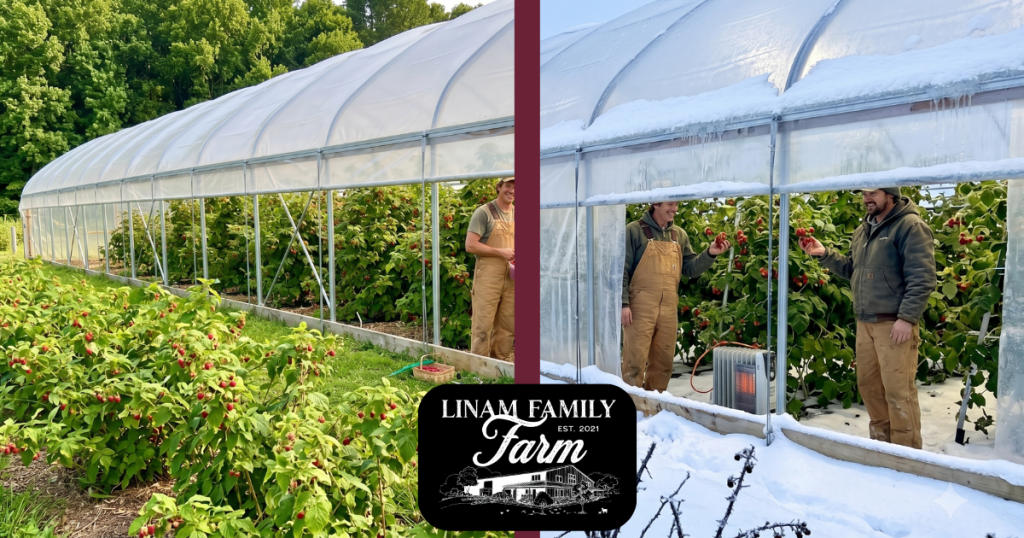
Farming in Arkansas means learning to live with uncertainty. You can do everything right — plant at the right time, prune correctly, water consistently, tend your rows with real care — and still wake up one morning in March to find that the weather has made its own plans. That is exactly what happened to berry farmers across our region this spring, and Linam Farm was not immune.
A late freeze swept through the Arkansas River Valley at the worst possible moment: right when our blueberry bushes were at peak bloom, their flowers open and vulnerable, full of the promise of a bumper crop. What followed was the kind of gut-punch that only farmers truly understand. Within days, estimates from agricultural experts suggested that 90 percent of the blueberry fruit set had been wiped out across much of the state. For our farm, we believe the loss landed closer to 60 percent once we got a clear picture of what survived, but that is still a significant hit on what was shaping up to be one of our strongest seasons yet.
We want to tell you the full story, because understanding what farmers face — and how we respond to it — is part of understanding why local food matters and why supporting the farms in your community is worth your time.
A Season That Was Going to Be Special
Heading into this spring, we had real reason for excitement. Over the past year, we expanded our blueberry operation from roughly 250 established bushes to nearly 850 total. The 600 new plants we put in are still too young to produce fruit — they need another year or two before they will contribute meaningfully to the harvest — but the original 250 were entering what should have been their prime producing years. Mature, healthy, fully established plants in their peak window. The flowers came in thick and gorgeous, and everything pointed toward the kind of blueberry season that makes all the hard work feel worth it.
Then the freeze came.
What a Late Freeze Does to Berry Crops
To understand the damage, it helps to understand what is happening inside a blueberry flower at bloom. The blossom is not just decoration. It contains the ovary that will become the berry, and once that tissue freezes, the fruit set is destroyed. The flower may look intact from the outside for a day or two, and then it browns and drops. No flower, no berry.
The cruelest part of a late freeze is the timing. Earlier in the season, the plants are still dormant and a cold snap does not do the same damage. Later in the season, the fruit has hardened and has more protection. It is that narrow window of peak bloom — when the plant is most alive and most open — that makes it so vulnerable. Our blueberries were fully flowered and at peak bloom when the temperatures dropped. The plants could not protect themselves, and there was nothing we could do to protect them either.
Arkansas grows between 200 and 300 acres of blueberries each year, and farmers across the state reported devastating losses. The farms furthest south, already deep into bloom, took the hardest hits. Operations further north were still dormant enough to come through relatively unscathed. We sat right in that difficult middle zone where the timing could not have been worse.
The Silver Lining Hidden Inside a Hard Season
Here is what we have learned after years of farming: there is almost always something to be gained even from the difficult seasons, if you are willing to look for it.
Blueberry bushes can live and produce for 25 to 30 years when they are healthy and well-tended. A single bad season does not define the life of a plant. In fact, a year when the plant does not put its energy into producing fruit often means it redirects that energy into growth. More root development. More canes. More vigor going into the following season. Our established blueberry plants are not done — they are resting, and they are going to come back stronger.
For our 600 new bushes, we made the decision early in the season to remove all the blossoms by hand. Every single one. It sounds counterintuitive, but it is standard practice with young plants: stripping the blooms forces the plant to focus entirely on building its root system and establishing itself rather than spending energy on fruit it is not yet ready to produce well. Those plants are going to be larger, healthier, and far more productive in their second and third years because we did not let them fruit too soon. By next season, we expect the difference to be significant.
So yes, the blueberry crop this year will be lighter than we hoped. There will still be berries — quite a few clusters survived, and we will absolutely be opening for u-pick blueberry season — but the volume will not be what we originally planned for. We appreciate your patience with us, and we think next year is going to blow you away.
How We Protect the Crops We Can
The blueberries taught us something this year about the limits of what any farmer can control. But it also reminded us why we have invested so heavily in protection systems for the rest of our operation, and why those investments matter.
Our blackberry operation uses a rotating cross-arm trellis system that gives us meaningful control over how the canes are managed throughout the season. When conditions turn, we can adjust the canes, use tarps to cover the rows, and respond in ways that a traditional fixed planting simply cannot. It is a more labor-intensive approach, but it reflects how seriously we take the responsibility of growing fruit that people are counting on. Our blackberries are going into this season healthy and full, and we are confident in what is coming.
The newest addition to our protection strategy is our high tunnel for raspberries, and it represents a whole new level of climate management for this farm. Raspberries are genuinely difficult to grow well in Arkansas. The summer sun here is intense enough to scald the berries, turning them white and rendering them unsellable. For years, the conventional wisdom was simply that raspberries were better suited to climates further north.
We did not accept that.
The High Tunnel: Controlling What We Can Control
Our raspberry high tunnel is not a simple plastic covering. It is a fully automated climate management system. The walls raise and lower electronically. Fans circulate air throughout the structure. Louvers adjust to regulate temperature and airflow. The system keeps the interior approximately 10 degrees cooler than outside conditions on the hottest days, protecting the delicate fruit from the intensity of an Arkansas summer.
At the entrance to the tunnel, we built an arbor from reclaimed farm materials and planted it with cross vines. Those vines will fill in with tangerine-colored blooms and provide natural shade for anyone walking in to pick. The whole setup is designed to make raspberries not just survivable here but genuinely excellent, and based on what we are seeing this spring, with plants already a foot tall and some early berries already ripe in April, we believe it is working.
We planted six different raspberry varieties in the tunnel this year to see which ones perform best in our specific conditions. It will take another season before we have truly meaningful data on which varieties thrive, but the early results are encouraging. Raspberries from Linam Farm are going to be something people in this region have not had real access to before, and we are proud to be the ones figuring out how to grow them here.
Why Supporting Local Farms Matters More Than You Might Realize
When people buy berries at a grocery store, the fragility of the food supply is invisible. The fruit appears on the shelf, priced and stickered, and there is no indication of what it took to get there or how close it came to not arriving at all. A late freeze, a drought, a stretch of bad storms — any of these can reshape an entire harvest, and the effects ripple out to affect everyone who depends on that crop.
Local farms like ours are on the front lines of that reality every single season. We do not have the buffer of a multinational supply chain to absorb a bad year. What we have is the relationship we have built with our community, the people who come back season after season, who buy a jar of jam in the off-season, who tell their neighbors where they picked the best blueberries of their lives.
That relationship is what makes it possible for a family farm to absorb a difficult season and come back swinging the next year. When you choose to buy local, you are not just purchasing fruit. You are participating in a food system that is more transparent, more resilient at the community level, and more directly tied to the land and the people who tend it.
What to Expect This Season at Linam Farm
Here is where things stand as we head into the 2026 season. Blueberry u-pick will be open, with a lighter crop than usual but still well worth the trip. Blackberries are healthy and we are expecting a strong season. Raspberries are growing in the high tunnel and we cannot wait to share them with you. Our new farm store is open with jams, jellies, honey, eggs, baked goods, and pre-picked blackberries available whether or not u-pick is running that day.
We are also part of the Arkansas Farm Trail passport program this year, which runs from March 28 through November 30 and now includes 29 farms across the state. Stop by any time during the season, make a purchase at the store, and get your stamp.
The freeze was hard. Farming is hard. But we are still here, still growing, and genuinely excited about what this season holds. We hope you will come be part of it.


